What does ‘full inclusion’ mean?
 Andrew Goddard writes: At the heart of much give-and-take about sexuality is the subject field of inclusion. A number of developments in the terminal few weeks take helpfully highlighted the problems and limits of this language.
Full inclusion as full participation in lay and ordained ministry in the Church
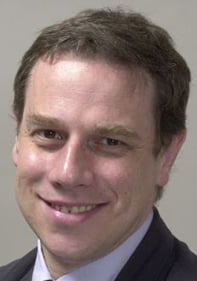
Final weekend the recently appointed Bishop of Grantham made public that he is gay and in a long-term merely non-sexual human relationship. Although the situation is not as novel as the media claimed, this degree of openness almost one'south sexuality inside the episcopacy does represent a pregnant development in the life of the Church building of England. It coincided with a number of aforementioned-sex married Anglicans writing an open alphabetic character to the House of Bishops which appeared in the Sunday Times, manifestly the paper whose enquiries led the bishop to speak about his situation to a different paper. This letter of the alphabet included the regular entreatment for "full inclusion of LGBTI people in the Church building".
But what is meant by "full inclusion"? A 2007 General Synod motion stated that "Homosexual orientation in itself is no bar to a faithful Christian life or to full participation in lay and ordained ministry in the Church building". This is mayhap the only aspect of the church'due south formal didactics and discipline which has almost universal back up across our deep differences. It is also the nearly natural agreement of "full inclusion of LGBTI people in the Church building". Until this weekend information technology could exist claimed that the lack of an openly gay person amid the bishops bandage doubt as to whether the church was genuinely fully inclusive in practice. It is now articulate – especially as Bishop Nicholas at no bespeak hid his sexuality or his long-term relationship – that the church building truly is committed, not just in theory, to implementing its vision of inclusion set out in 2007.
There are at present openly gay people among not but the baptised and communicant laity, deacons and priests but also amidst serving bishops. At every level there is nonetheless work to exist done in the face of areas of resistance and exclusion to people simply on the grounds of their sexual orientation or allure. All the same, the church building has at last clearly embraced "full inclusion of LGBTI people in the Church" in its proper and only logical sense: "full participation in lay and ordained ministry building in the Church building" without regard to sexual orientation. Information technology has of course always washed this just never as openly. It has now done and so in a style which is obvious and should not be reversed and which will, ane hopes, enable LGBTI people to feel they can, if they wish, be more open about their sexuality and help the church to welcome them as Christ welcomes them.
Flawed appeals to total inclusion
The letter writers are, even so, unlikely to accept this decision. Their call for full inclusion asked for much more than. They want the bishops to "enable those parishes that wish to do so to celebrate the love that we take establish in our wives and husbands". But this is to address a split question from that of inclusion. It is a question not of including people but of deciding which of the many patterns of life constitute among LGBTI people the church tin can faithfully gloat. Even their own proposal would not be fully inclusive of all LGBTI people one time inclusion is to be understood beyond "total participation in ministry building". It would still exclude from the church's liturgical celebrations those who, for whatever reason, do not choose to marry their same-sex partner but to construction their relationships in other means.
Despite this, the entreatment to inclusion continues in lodge to persuade people to go further and commend same-sex unions. Merely this is a quite distinct affair involving inclusion and approving of sure ways of life as morally acceptable rather than inclusion of people. The reason for this continued appeal to inclusion was caught by Justin Welby speaking at Greenbelt where he said:
Nosotros cannot pretend that – so I'thousand putting one case and then I'g going to put the other – we cannot pretend or I tin't pretend myself that inclusion from the point of view of someone in a aforementioned sex relationship just to take a unproblematic…that inclusion of someone in a same sex relationship that falls short of the blessing of the Church is going to feel like inclusion – it'due south non going to be perceived every bit inclusion. I think we're conning ourselves if we say that there is some clever solution out there that ways yous can do less than that and it will experience similar inclusion.
Here – voicing the views of many – he has adult the language of inclusion in two important only flawed respects. It refers to a subjective feel – something must "experience similar inclusion"– and and then to inclusion in a specific form every bit being necessary if information technology is "to exist perceived as inclusion" and run into that subjective test: the "blessing of the Church" on "a same sexual activity relationship". These two moves are what then atomic number 82 to a number of problems. The well-nigh obvious in relation to the first is evident in what the Archbishop and so said:
Simply when you practise that, if you do that, it volition feel like exclusion to a bunch of other people, betrayal, subversion, even stronger words than that.
If inclusion is understood subjectively then that must utilize beyond the board. Merely what feels like inclusion to some feels like non-inclusion or exclusion to others. So as he went on to say, leading to dreadful reports on the need to "hug a homophobe":
We have to observe a way in which we love and embrace everybody who loves Jesus Christ, without exception and without hesitation. [Applause]. But – there's a just coming – but that includes those who feel that same sex relationships are deeply, securely wrong, or who live in societies where they feel they are deeply, deeply wrong and they feel deeply compromised by other Christians around the world.
And so whatever arroyo which tests a proposal but on the grounds of whether anybody will feel included leads to an impasse, a dead-end and a paralysis:
Do I know when in that location'll be a indicate where…a blessing will happen – no, I don't know the answer to that and I can't encounter the roadmap ahead.
This is considering "inclusion" and then defined proves impossible whenever there is deep moral disagreement. We will therefore never discover a way forward on the issues which divide united states of america if we reduce the discussion to "inclusion" or fifty-fifty make "inclusion" the primary category of our thinking. The problem is fifty-fifty greater if nosotros and so define inclusion in terms of "what feels similar inclusion" and/or tie that to a particular moral stance which is highly contentious. If nosotros treat inclusion in that way then we are maxim that in that location cannot be truly full inclusion until at that place is total agreement. Alternatively, inclusion comes merely at the toll of moral incoherence. The moral judgment of every person in the church about what constitutes a holy life has to be given some form of validation past the church so that those who hold it and live past it can experience genuinely included. But if the church building does the latter and meets the moral demands of certain people who say they do not currently experience included then, as the Archbishop pointed out, others will thereby feel excluded. Nosotros are hamstrung in the face of disagreement if we view inclusion in this way considering for the church to take a particular moral position inevitably means it will fail in its call to be inclusive when there is moral disagreement.
How do we motion forward? Going beyond "inclusion"
Instead of getting stuck in this cul-de-sac we need to say that inclusion properly understood is now more firmly established as a public reality than ever before thanks to the Bishop of Grantham. Nosotros demand to welcome and consolidate that simply we also demand to be clear that inclusion does not and cannot requite united states of america the answers to the principal question we now must accost. This is the question of how those who are included should alive. Inclusion cannot respond what forms of life the church must welcome, include and anoint and what forms it must non gloat and should possibly even warn against as sin. Such warnings volition almost inevitably brand information technology hard for those who are living that style from "feeling included".
Every bit we move from conversations to seek a mode frontwards nosotros therefore need to do two things. First, we demand to go along to work to ensure that we are fully inclusive in the only proper sense: that "homosexual orientation in itself is no bar to a faithful Christian life or to full participation in lay and ordained ministry in the Church building".
Second, nosotros need to end pretending that appeals to inclusion can reasonably justify whatever more than this. The latest open up letter from General Synod members is interesting on this count in that it makes no specific requests other than that "the College of Bishops is unequivocal in its acknowledgement that all, including those who place as LGBTI, are essential to the health and future of our church and mission to the wider world" which is perhaps best understood as a rewording of the 2007 movement just quoted. Withal, it and so says the signatories are "fully committed to the procedure of encouraging greater inclusion across the Church of England for all". This, though limiting itself to "greater" non "full" inclusion, appears to be a veiled asking for the sort of developments explicitly sought in the Dominicus Times open alphabetic character. We need to recognise that if so then "inclusion" is just a rhetorical device which lacks substance or persuasive power and seeks to portray opponents as opposed to inclusion.
The decision equally to whether to include sure ways of life inside the leadership and liturgical celebration of the church – in whatever area of life, not simply sexuality – cannot be made on the basis of an entreatment to inclusion. It requires the states instead to appeal to God's revelation as to his expert and perfect will for our lives and to a moral vision of what enables man flourishing consistent with that revelation. It is to these matters, and not to a poorly-defined shibboleth of "inclusion", that the bishops and the wider church now need to focus their attention.
Follow me on Twitter @psephizo
Much of my work is washed on a freelance basis. If you have valued this post, would you considerdonating £1.20 a calendar month to back up the production of this blog?
My blog is a "Pay As You Feel" resources. You can have access to all of my work for complimentary, or y'all can choose to make a small donation to help me keep writing. The choice is entirely yours.
If y'all enjoyed this, do share it on social media (Facebook or Twitter) using the buttons on the left. Follow me on Twitter @psephizo. Similar my folio on Facebook.
Much of my work is done on a freelance basis. If you accept valued this post, you can make a single or repeat donation through PayPal:
Comments policy: Good comments that appoint with the content of the postal service, and share in respectful contend, tin can add existent value. Seek first to understand, then to be understood. Brand the about charitable construal of the views of others and seek to learn from their perspectives. Don't view contend as a conflict to win; address the argument rather than tackling the person.
Source: https://www.psephizo.com/sexuality-2/what-does-full-inclusion-mean/
0 Response to "What does ‘full inclusion’ mean?"
ارسال یک نظر